Emma Perry’s journey took her from Texas to Transcarpathia. Over the past three years, she has served in the Ecumenical Office of the Synod of the Reformed Church in Hungary. Her work here profoundly reshaped her way of thinking, while her visits to Transcarpathia showed her that when creativity is paired with faith, it can truly move mountains. We talked about her experiences before she returned to the United States.
You came to Hungary from Texas. What did you bring with you from your home church?
My parents come from different denominations, and I was seven years old when we started attending the local Protestant congregation that welcomed people from a variety of faith backgrounds. It was a congregation of the Christian Church (Disciples of Christ), and this is where I grew up.
Youth ministry has always played a central role in our church’s life, and from a young age, we were encouraged to participate in larger church gatherings and find our roles in different areas of congregational life. As a teenager, I was even able to serve as a deacon. Furthermore, my peers and I took part in mission trips, visiting other communities and serving alongside the locals. These youth programmes played a crucial role in my own journey of faith.
Later on, you had the possibility to work with homeless people and refugees as well. I imagine those experiences shaped you profoundly as well.
Through a university program, I had the opportunity to intern with an organization serving people experiencing homelessness. It was difficult to come face to face with the burdens so many of our clients carried—many of them had lost their families, or were living with mental illness. At the same time, I found great inspiration in the dedication of my colleagues. They were not doing this work for the modest salary, but because they had a genuine sense of calling. My time there sparked my interest in the social sector.
Later, as an international relations major, I spent a summer internship with a refugee assistance organization. I gained first-hand insight into the many barriers of people from different cultural backgrounds—not only linguistic, religious or cultural obstacles, but technological ones as well. My work there included teaching basic computer skills to refugees from countries with extremely limited internet access and where even owning a computer is uncommon. That experience further confirmed my desire to pursue a career in social work.
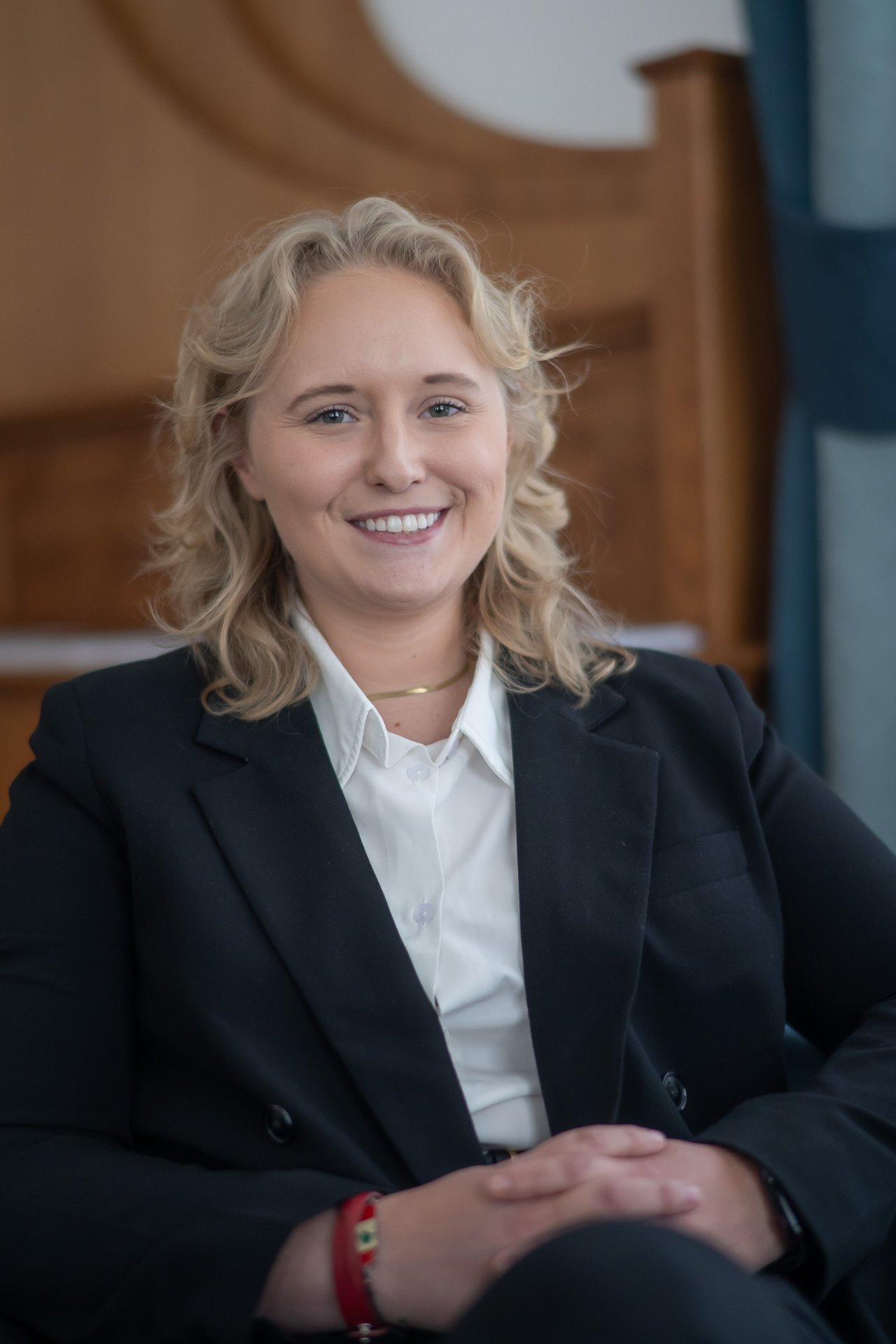
Photo: László Sebestyén
What was your purpose of coming to Hungary?
I came to Hungary as a participant in the "Global Mission Intern programme" under the Global Ministries organisation. The program is designed to give recent university graduates the opportunity to gain experiences abroad with church partners and non-profit organizations while sharing the good news of Jesus Christ with people from diverse communities.
In Hungary, I was offered an internship with the Ecumenical Office of the Synod of the Reformed Church in Hungary. What motivated me most was the opportunity to gain experience in a completely new environment while working in areas where I already had knowledge and strengths—refugee assistance, communications, and writing. I saw it as the perfect opportunity to grow both professionally and personally.
What exactly were your responsibilities at the Ecumenical Office?
I carried out communication-related tasks, including editing articles translated into English, as well as assisting in the editing and writing of other English-language materials intended for an international audience. Over the past three years, I have travelled to Transcarpathia more than fifteen times with staff from the Ecumenical Office, accompanying our partner organizations.
What experiences did you gain among the Hungarian community in Transcarpathia?
Their resourcefulness and perseverance in coping with difficult circumstances are truly exemplary. With their creativity and faith, they are capable of moving mountains. The sense of solidarity, strength, and active faith I experienced among the people of Transcarpathia has stayed with me ever since.
I have many memories in Transcarpathia, from the numerous visits throughout the past three years. While each visit imparted new knowledge and understanding, several stand out to me, particularly now at the end of this three-year period.
On my very first visit, only a week after I first arrived. I was able to learn about the Survivor and Community-Led Response programme, implemented with the support of HEKS Swiss Church Aid. In this programme, communities and churches could develop their own specially tailored projects to fit their specific needs rather than having an outside actor come in and develop a project for them. I was impressed by how unique and inspired many of the projects were, from developing community kitchens, purchasing firewood, and a particular project that purchased baby chickens for widows to care for, acting as both sustenance in the form of food but also spiritual sustenance in the form of caring for God’s creatures.
Many memorable moments and kind faces also come to mind—for example, a local community leader, Uncle Béla, whom I met at the Diaconal Coordination Office. Or the little boy who excitedly showed me the ducks and lambs he had named—because there, every animal has a name. And the intimate moments sitting around the table, sharing dinners and conversations. After a while, our discussions shifted from lighter topics to more serious ones, including church partnerships and matters of faith and life, which the locals openly shared with me. These deeper conversations helped me better understand the situation and the people there.
What do you consider the biggest challenge of your time in Hungary?
Since my arrival, I have kept a journal, which I recently reread. During the first weeks in Budapest, I found it difficult to navigate the various modes of transport, and for three months I was even afraid to take the metro. I was also hesitant to ask anyone for help, worried that I might ask a “stupid” question.
After a while, I made a conscious effort and told myself that I had to ask for help, because that was the only way I could learn. Perhaps this was the biggest challenge: learning how to ask questions about things that are obvious to others. Once I gathered the courage, many people encouraged me, and more and more questions started to arise in me. Eventually, the challenge became how to apply the knowledge I had gained in a way that could support the work of the department.
In what other ways has the work here shaped you?
I was never a particularly optimistic person, but I have changed a lot in this regard. I have seen how our church partners work toward serious, high-responsibility goals, yet within their communities, they are still able to set aside their problems and share moments of laughter and everyday conversations about family life.
Challenges and obstacles are always present, and there are many things beyond our control—for example, when someone does not show up for a meeting with their social worker, which prevents the social worker from progressing in their tasks and also affects the work of others. However, I have come to believe that we are better off—and may even benefit—if we maintain a continuous attitude of hope toward the world around us. This is also important for our mental well-being, as negative thinking is not beneficial in the long term. As Christians, moreover, we are called to give voice to hope. If we focus on what we can learn from situations and recognize what we might do differently next time, it can become valuable for the future.
I would still not describe myself as optimistic; rather, I would say I am radically hopeful.
A passage from the First Letter of Peter is especially close to your heart: “Each of you should use whatever gift you have received to serve others, as faithful stewards of God’s grace in its various forms” (1 Peter 4:10). What do you consider your most valuable spiritual gift?
To me, this verse means that each of us is given different gifts. It is first of all our task to recognize discern what these are and, second, how we can use them to serve God. Over time, we see changes in how our gifts manifest, we may also discover previously unknown gifts. It is important to cultivate an outlook that encourages learning, exploration, and growth in order to be, as the verse says, faithful stewards of God's grace.
When I came to Hungary, I thought my strongest abilities were writing, patience, and openness to learning. At first, I wrote and edited articles for the Ecumenical Office, but as I learned more, I realized I could also use these skills in grant writing, thereby supporting Refugee Service as well. I also consider myself a good public speaker, so I began to assist with preparing presentations.
The work I have done here has also made me realize that being an outsider in a process can itself be a gift. When someone repeatedly runs into the same obstacles, it can be valuable to have an external perspective that can point out: “There is another way to do this.”
What can help cooperation in conflicts arising from differences and diverse backgrounds?
In my work at the Ecumenical Office, I have often experienced tensions between different partners. I do not believe it is always possible to agree on everything—just as not every member of a family agrees on everything. When disagreements arise, I think the most important thing is to “stay at the table”, to remain in dialogue with one another, to share our perspectives, and at the same time listen to the other side with trust and hope that we can achieve results together. Even if we cannot agree, we can still strive to understand one another. After all, something sacred connects us; as many of our partners write in emails, we are brothers and sisters in Christ. We should remind ourselves of this most sacred bond even when our differences feel bigger than our similarities.
When do you feel closest to God?
The church in Texas has a large choir that, even in my childhood, performed beautiful concerts. We also often invited musicians from the nearby Christian university. Music has therefore always been an important part of worship and praise for me. Because of this, I feel most spiritually moved when listening to music or singing.
Did you attend a church in Budapest as well?
Yes, I attended the congregation of the St. Columba’s Scottish Mission Church in Budapest, a joint English-speaking congregation of the Church of Scotland and the Reformed Church in Hungary.
What differences did you notice between the American and Hungarian churches?
I mainly see differences in practical matters. For example, in our church the pastor is most often called a minister and wears a robe and stole rather than a cassock. The style of preaching and worship is also different, and we sing different songs.
My own denomination is very diverse, we have congregations across the various regions of the U.S., our members come from all backgrounds, and our church ministries reach far and wide into the life of the church and its members. In the case of the Reformed Church in Hungary, I find its coherent identity impressive, as it extends across borders, since many Reformed believers live outside Hungary as well. I experienced this sense of unity most strongly in Transcarpathia and Transylvania.
What are your plans after returning home?
When I return to the United States, I will give a presentation to the leadership of Global Ministries about my experiences in Hungary, and afterwards I will visit various congregations to share my journey and spiritual experiences. In the longer term, I would like to work in the field of international church relations.
I am also interested in engaging young people in church life and continuing dialogue with different congregations about this topic. I also find it important to build bridges between generations. Reaching rural areas is particularly meaningful to me, especially since coming to Hungary. I have seen that the church is often a central part of life in smaller communities, contributing to their development.
How would you motivate the young people today to attend church, based on your own teenage experiences?
My most defining experiences are connected to so-called “lock-in” programs. During these events, we teenagers would spend the night at church, where the time was filled with games and Bible studies. We had a lot of fun while also getting to know each other better. In the summers, we went on service trips together, and these experiences accumulated and brought us even closer.
I believe the most important thing is to encourage young people to ask questions and to create a safe space for that. At the same time, we should also give them opportunities for fun and present programs in an engaging, playful way. The key is finding balance.
Emma also had the opportunity to preach in her own congregation. – Every May, the youth organized Youth Sunday; on these occasions, we were responsible for everything from Scripture reading to music and even communion. It was very moving when graduating students stood up to give thanks to the community that had accompanied them through their journey into adulthood. I also had the opportunity to preach there several times.