The renewal of the church’s governing bodies begins with the same question: whom is God calling to serve in the years ahead? The answer does not depend on the decision of a single person or body. From the nomination process to the formation of the new General Synod, congregations, presbyteries, church districts, and election committees are involved in a process that takes several months in the Reformed Church in Hungary.
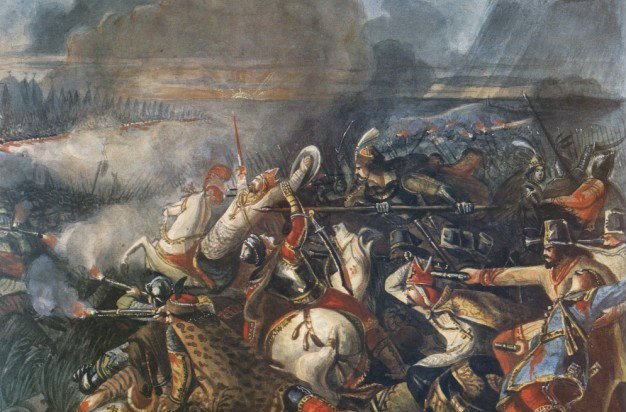
29th August 1526: a day to remember for the whole Hungarian nation, because of its miserably tragic consequences. This historic event burnt itself into common knowledge as the main reason for Hungary`s decline. Before Mohács, the Kingdom of Hungary played a significant role in the Carpathian Basin, as well as in Central-Europe, not just regarding economic aspects, like precious metal mining, but from geopolitical perspective, too, because Hungary functioned as a shield against the ever-rising threat of the Ottoman Empire. However, due to the defeat at Mohács, the majority of Hungary`s elite, headed by the king, Louis II, respectively secular and religious leaders, was murdered. Therefore Buda, the heart of the country, lay exposed before the feet of the Ottoman sultan, Suleiman I., who thus could easily conquer it in 1541, dividing the Kingdom of Hungary into three pieces (Royal Hungary, Ottoman Hungary and the Principality of Transylvania), and destroying any hope for liberation from Ottoman power for 145 years.
From 1 to 4 October 2026, Tallinn hosted the European meeting of synod members of the Community of Protestant Churches in Europe (CPCE). Synod representatives of CPCE member churches met in this format for the fifth time. The series, which began in Bad Boll in 2012, continued in Budapest (2015), Bern (2017) and Bad Herrenalb (2023). The central theme of the four-day meeting in Tallinn was “Passing on the Faith to the Next Generation”. Through lectures, workshops, institutional visits and joint worship services, participants reflected on how the Christian faith can be passed on authentically in the rapidly changing, increasingly diverse and secularised societies of Europe.
More than fifty participants from fifteen European countries gathered for the 16th Assembly of the European Christian Environmental Network (ECEN). Participants came from Catholic, Reformed, Lutheran, Anglican and Orthodox backgrounds, alongside representatives of ecumenical and environmental organisations, who shared their experiences and perspectives.
RCH hosted a delegation from member churches of the Protestant Church in Switzerland and HEKS Swiss Church Aid from March 13 to March 14. The representatives visited with various departments and missions of RCH and the Hungarian Reformed Church Aid to gain greater insight into the church's activities and mission in Hungary.
The task of the team of the National Reformed Roma Ministry is to support the ministry of evangelisation among the Roma people, either directly or in cooperation with Reformed congregations and institutions, and to work toward reconciliation between Roma and non-Roma. In total, the service reaches around 7,000 people. Interview with István Kocsis, the deputy head of the Diaconia’s department for social inclusion.
On November 7 and 8, Eurodiaconia, in cooperation with the Reformed Church in Hungary (RCH), hosted a Roma Inclusion Network Meeting in Budapest. The meeting was open to partners across Europe working in Diaconia within the network or part of a member organisation of Eurodiaconia.
In 2025, the Refugee Ministry of the Hungarian Reformed Church Aid is implementing two significant projects to address the needs of refugees, asylum seekers, and other beneficiaries of international protection residing in Hungary.
RCH hosted a delegation from member churches of the Protestant Church in Switzerland and HEKS Swiss Church Aid from March 13 to March 14. The representatives visited with various departments and missions of RCH and the Hungarian Reformed Church Aid to gain greater insight into the church's activities and mission in Hungary.
The war between Ukraine and Russia has continued for three years now. Throughout this time, more than five million people have been forced to leave their homes. Interview with the young man who was seventeen when he fled his family nest in Transcarpathia.
A small group of Hungarian Reformed women from Transcarpathia/Ukraine, Serbia, and Hungary was planning to travel to Lebanon again in March to discuss with Lebanese, Syrian, and Northern Irish women what it means to live in the shadow of war. The trip had to be postponed, but now we invite everyone to pray with us for peace in the Middle East, for our Christian siblings living there, and especially our sisters.
Rev. Dr. Haroutune Selimian, President of the Armenian Protestant Community in Syria, visited Hungary on 4–5 December, meeting with representatives of the Reformed Church in Hungary (RCH), the Hungarian Reformed Church Aid (HRCA), members of the Armenian community in Budapest, and regional partners from the Királyhágómellék Church District (Romania). The visit continued a long-standing partnership grounded in mutual solidarity, shared testimony, and a commitment to faithfully serving communities facing social and economic uncertainties, and to persevering in shared witness through difficult times.
Being a pastor in the Middle East is in itself a courageous decision — doing so as a woman requires extraordinary faith and perseverance. Najla Kassab, the first female president of the World Communion of Reformed Churches, has spent decades serving in a region scarred by war, persecution, and mass migration. Her story is one of calling, faith, and the power of communities to endure.
Being a pastor in the Middle East is in itself a courageous decision — doing so as a woman requires extraordinary faith and perseverance. Najla Kassab, the first female president of the World Communion of Reformed Churches, has spent decades serving in a region scarred by war, persecution, and mass migration. Her story is one of calling, faith, and the power of communities to endure.
For thirty-five years, the Association of Reformed Youth (Refisz) has been inviting young people to encounter the renewing power of God through faith, community and service.
Why does our church need a strategy? Is it worthwhile to begin this long-term work towards the end of the six years mandate of a church leadership? We asked pastors Anett Tóth and Emese Varga, members of the church strategy working group.
Rev. Dr. Setri Nyomi, general secretary of the World Communion of Reformed Churches (WCRC), met with Rev. Prof. Dr. Jerry Pillay, general secretary of the …
Training on security awareness and crisis management in Europe was carried out for CEC Member Churches in Slovakia and France. The sessions were part of …
A hybrid conference held on 10 March in Madrid, organised by the Conference of European Churches featured training on security awareness and crisis management in …
The Global Ethical Stocktake, an initiative led by Brazil and the United Nations around COP30, aims to bring ethics, values, and spirituality into the next …